


The story consists of a dialogue between recently deceased occupants of graves in a cemetery, most of whom retain all the features of their living personalities. What these talkative ghosts say is overheard by a writer who believes he is a loser and in a moment of despair has laid down between the graves. You may have recognized Bobok, a short story by Dostoevsky and also the best description of our film industry.
The feeling of being left out by gossiping ghosts is everywhere from Hollywood to the farthest indie circles. I still remember this New York filmmaker group which started collegially before becoming the usual opaque money-grabbing machine. After a few monthly meetings, I received an email saying that I was now part of the ‘insiders’, a secret group with no special privileges other than knowing you were in it. I had the feeling of having passed some kind of College sorority ritual that I haven’t asked for. The sheer stupidity of it made me leave this group on the spot.
The fear that there is a secret group or a by-invitation-only party somewhere and you’re not invited is never as acute as in major festivals. In a pandemic panic, the first online Cannes film festival offered a meeting platform where anyone with an accreditation could connect with top players. All of a sudden, the traditional hierarchy was upended but the rumor quickly spread that said top players moved their discussion to a ‘secret’ CAA platform. It doesn’t matter whether that’s true or false - what does is the American love for secrecy. Where does that come from? Is it political and tied to fantasies of a deep state? Is it religious and linked to some atavistic memory of late 17th-century Protestant secret meetings? Is the need for clubs, lodges, and private groups a logical counterweight to the feeling that everything in this country is somewhat flat, hence the constant fantasy that there must be something more to it? And if there is nothing, let’s pretend there is for the privilege of ghosting others as a sure mark of status.
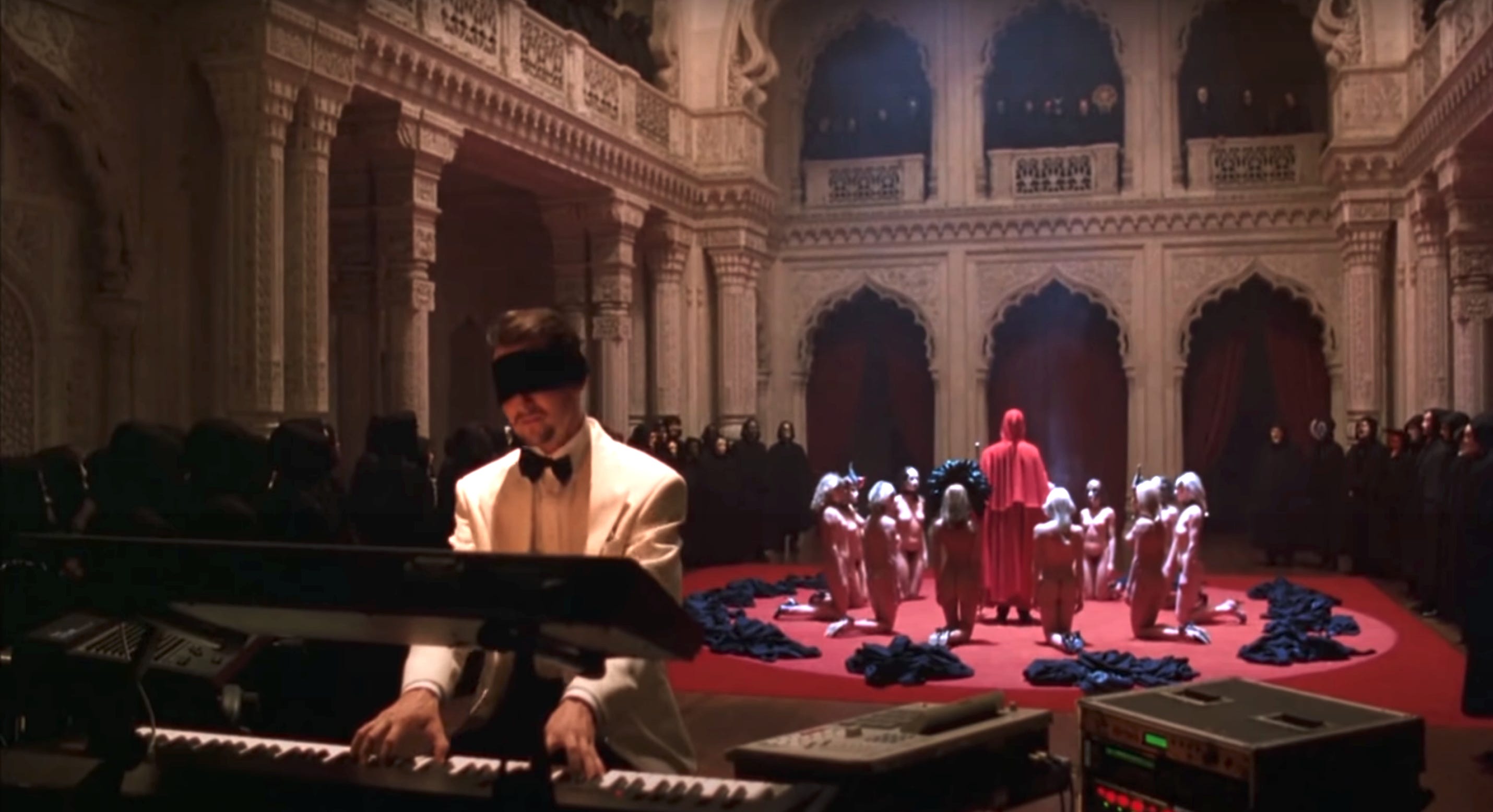
Ghosting quickly became the film industry’s social etiquette. In no other field is it this prevalent. Send an email to the banking, law, medicine, academia, engineering, or biotech industry and you will receive an answer within two days. A canned answer maybe, but an answer. Meanwhile, in the film industry, people keep parroting: no answer is an answer, no answer is an answer, no answer is an answer.
No.
No answer is no answer.
It either means: ‘You are unimportant and can’t bring me anything so I won’t lose my time on you’ or ‘You are not part of my club so you don’t really exist’. This is entirely different from ‘I hear you, but this is a no’.
I have been ghosted more than once and I still can’t get used to it.
My first reaction is disbelief (He didn't answer me? Surely he must be traveling or in an emergency room), then I somewhat feel annoyed at myself for having misjudged the person (Still not answering? He must be dead), quickly followed by a mix of anger (hope no one shows up at his funeral!) and mortification (Let me lie down in my own grave and be done with this).
Joseph Conrad's quote comes to mind when he writes about “the subtle but invincible conviction of solidarity that knits- together the loneliness of innumerable hearts, to the solidarity in dreams, in joy, in sorrow, in aspirations, in illusions, in hope, in fear, which binds men to each other, which binds together all humanity”. This is what ghosters throw away. ‘Their loss’, I think to myself while knowing too well that this is our loss and that every time someone is ghosted, a knot in the human tapestry gets undone.
Yet something is changing. The recent corporate cultures of Amazon and Netflix brought new behaviors. It’s quite hard to reach high-up execs at Netflix but once you do, they don’t ghost you. They know how to deliver a courteous ‘nope’ which, in contrast with Hollywood’s brutish culture of holding and dumping, feels almost aristocratic. I’m not clutching at my pearls here, let’s not forget that the brutish culture I am referring to panned from ghosting to abuse and sexual assault. With the latter kind of violence no longer acceptable, maybe ghosting will become the next discreditable behavior.
Recently some players started to openly talk about the ghosting curse, and so did journalists. And then, there is this recent phenomenon which I call ‘ghosting up’.
A few months ago I auditioned a young inexperienced actor. Since he was auditioning facing the lead (his brother in the script), I taped and edited the scene to see how their characters matched. Turns out this actor was not a good fit for many reasons but I wrote him an email saying that since he just started acting and had no demo reel, I could share the audition scene with him. Having a good demo reel is essential to obtain auditions, so offering professional material to this actor was pure generosity on my side. It’s also never done.
No answer.
Welcome to a world where one can be ghosted both ways.
I suspect that dating apps like Tinder and the like made a whole generation okay with dismissing people in one swipe. But it would be too easy to put the responsibility on millennials as it’s the boomers who built this ghost industry. No wonder also that Gen X ends up ghost-sandwiched between the two. In the end, ghosting up, meaning ghosting people who can do something for you, might be the saving middle finger given by the young generation to the behavioral decay of their elders. A valid answer to the boomers’ tradition of ‘fucking-up’.
“If you’re going to get anything done in this business, you’ve got to start fucking up,” said Paul Schrader while remembering his start as a screenwriter1. “Don’t talk to anybody unless they can do something for you. Don’t waste your time on losers.” In other words: ghost the people who cannot serve you. From the so-called friend who asked for all of my festival contacts but would not say “thank you”, let alone reciprocate, to the producer for whom I volunteered my time who would not return my emails, I’ve met my share of these ‘fucker-uppers’. They somehow all have the same traits: sickly ambitious, sometimes shrewd, often vulgar, but what they really share is this blissful unawareness that the way they deal with others colors and limits their work. This is not a question of morality. It’s just that who you are seeps through your films in ways you cannot control. In the end, everyone with a bit of acuity can see it. It’s particularly fascinating that Schrader, an intelligent man concerned with transcendentalism and spirituality, did not understand that. His entire filmography shows how his “fucking up” attitude gradually dwarfed something in him, preventing him to reach the level of his favorite film directors: Bresson, Ozu…
And it’s not as if he was blind to what “paying attention to a looser” could do.
"I had a series of things falling apart”, he wrote, “a breakdown of my marriage, a dispute with the AFI, I lost my reviewing job. I didn’t have any money and I took to drifting, more or less living in my car, drinking a lot, fantasizing. The Pussycat Theater in L.A. would be open all night long, and I’d go there to sleep. Between the drinking and the morbid thinking and the pornography, I went to the emergency room with a bleeding ulcer."2 Schrader turned his failure into a screenplay titled Taxi Driver but this would have gone nowhere if someone did not waste his time on an unknown loser named Paul Schrader. "I sent it to a couple of friends in L.A., but basically, there was no one to show it to [until a few years later]. I was interviewing Brian De Palma, and we sort of hit it off, and I said, “You know, I wrote a script,” and he said, “OK, I’ll read it.”3
OK, I’ll read it.
De Palma read then shared Taxi Driver with Michael Phillips who would go on to produce the movie. I sometimes wonder what would happen if De Palma had ghosted him: no film career for Schrader, for Scorsese, for the many others who emerged thank for this one person who did not ghost.
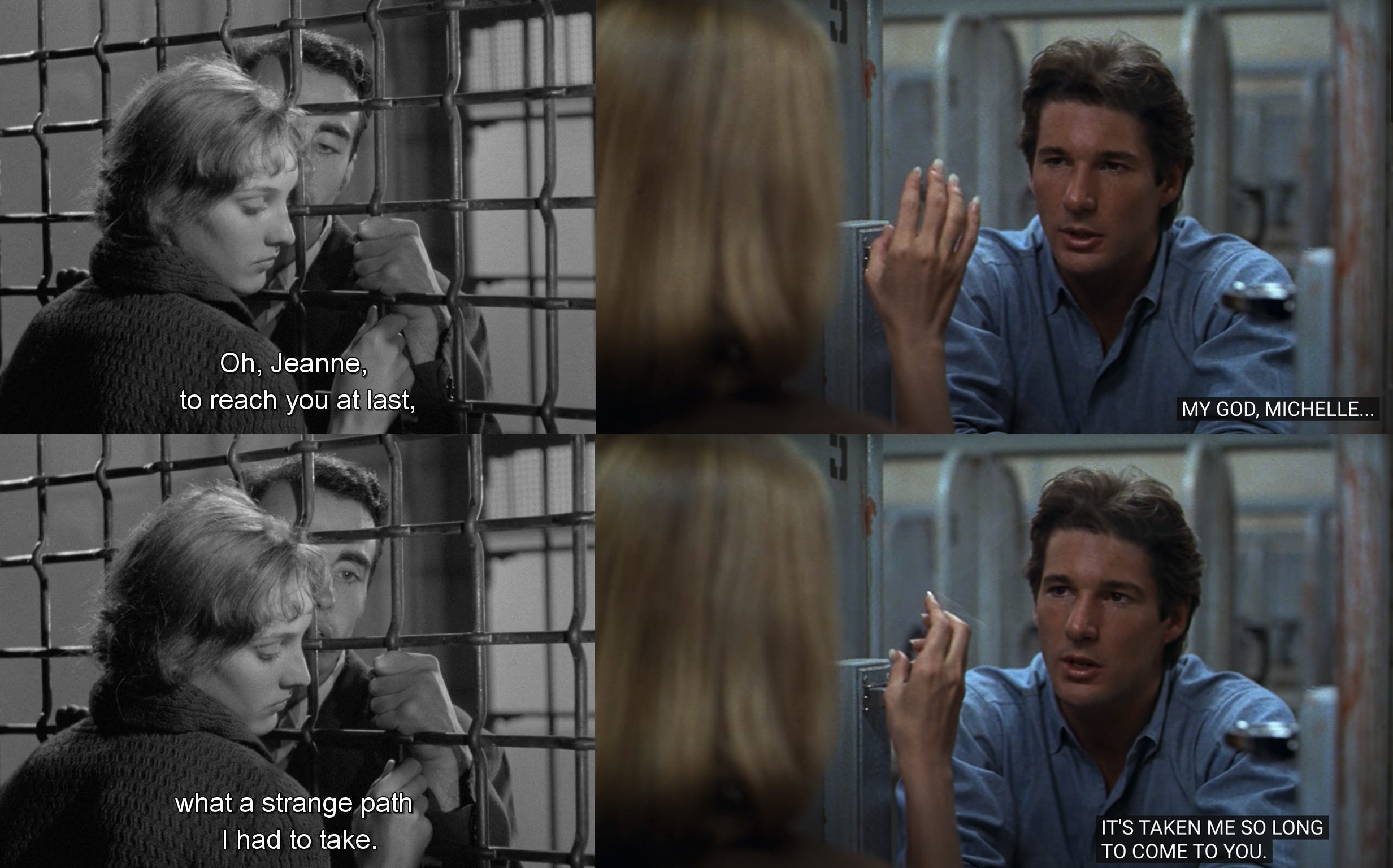
Paul Schrader Wants to Make Another Movie by Alex Abramovich, The New Yorker, May 1, 2023, p.53.
The Hollywood Reporter, Taxi Driver’ Oral History: De Niro, Scorsese, Foster, Schrader Spill All on 40th Anniversary, by Gregg Kilday, April 7, 2016.
Ibid.
Hi Here's some blog posts regarding this before the word "ghosting" came into vogue. It used to be called "blacklisting" which has a less pleasant vibe to it.
https://jonjost.wordpress.com/2015/01/27/on-becoming-a-non-person-part-1/
https://jonjost.wordpress.com/2017/04/04/on-becoming-a-non-person-2/