


I am not writing about my filming for a change but sharing a few recent observations.
European filmmakers take Hollywood.
I was scrolling through Coralie Fargeat’s Instagram and saw this:
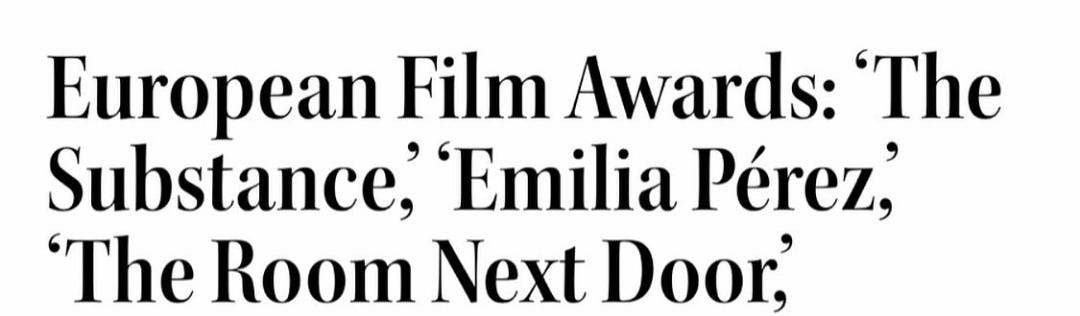
…which is paradoxical because these three movies are made in the English language, with American actresses, and their clear objective is not Europe but the USA. European filmmakers are taking over Hollywood with Hollywood actors as Trojan horses. The result has nothing ‘European’. No one can tell that The Room Next Door is made by a Spaniard or that The Substance and Emilia Pérez are from French filmmakers.
Does it work?
Yes for most, no for Almodovar. While The Room Next Door was mostly filmed in Spain - clumsily passing for upstate New York - we end up feeling the artificiality of it. It might have been better to make it purposely artificial, like Emilia Pérez, which was entirely shot in a Parisian suburb.
Do filmmakers lose something in the making?
Hard to say for Coralie Fargeat since it’s only her second feature. Almodovar salvages his unique rhythm, but the English language takes something away from his power of seduction. What was touching in his Spanish actresses becomes starched in his American ones. As for Audiard, you could have told me that Emilia Pérez was filmed by Damien Chazelle, I would have believed it. Apart from the lurking violence, not much is left of his touch.
The visibility, if not the presence, of European films is very much increasing in the US. The 2024 Oscars are a clear example of this. In the Best International Feature Film category, four out of the five nominees were European: The Teachers’ Lounge (Germany), Io Capitano (Italy), Society of the Snow (Spain), and The Zone of Interest (UK). France, as always, made the wrong move by not choosing Anatomy of a Fall, but it was still nominated in five categories and won for Best Screenplay. Poor Thing was very present too, and it’s not exactly an American production. More recently, one can also mention Halina Reijn’s Babygirl.
It’s as if the ocean of cinema is shrinking into a fishbowl, and European filmmakers are moving into Hollywood’s decorative plastic castle. What is lost is Exoticism - something the French adore, which eventually moved to strange new forms.
And talking about fishbowl…
Did you notice that all of the movies previously mentioned rely on stylized photography using ultra-wide or fisheye lenses? This type of lens distorts the corner of the screen and our vision with it to make us feel like in a fishbowl. Before, they were used sparingly, for example, in dream sequences in A Clockwork Orange by Stanley Kubrick, Fear and Loathing in Las Vegas, or Brazil by Terry Gilliam. Today, they are used in entire movies regardless of genre or the scene playing out, as if to remind us constantly that a movie is an artificial construct.
It’s eerie how present this lens is in recent movies: Soderbergh uses a fisheye lens from start to finish in his noir No Sudden Move, David Cronenberg heavily indulges in it in Crimes of the Future, and Coralie Fargeat follows suit in The Substance. You can also see very wide-angle lenses used in Everything Everywhere All at Once by The Daniels, Nope by Jordan Peele, and The Zone of Interest by Jonathan Glazer. The fisheye is Yorgos Lanthimos’ most-loved lens, used extensively in both The Favourite and Poor Things. It became literally ubiquitous in commercials and music videos. So much in fact, that movies using regular lenses start to feel flat, as if outdated.
”Fisheye lenses indicate extreme emotion, confusion, and disconnect” - how perfectly that matches our times!


Where are we?
If you have been reading this Substack, you know how deeply interested I am in how space unfolds in movies. I wrote about space in Gus Van Sant and Hu Bo movies, as well as in Louis Malle’s The Lovers, Agnes Varda’s Vagabond, and my own filmmaking. If the over-encompassing use of the fisheye lens struck me as symptomatic, I also noticed something new about backgrounds: they are either vanishing or leading nowhere.
In The Room Next Door, Ingrid and Martha stay in an isolated house that becomes an abstract space, a death antechamber. The big question is what is waiting behind a door. There are no real outdoors. Similarly, there is hardly anything to see behind the characters in The Substance or The Zone of Interest, where actors often walk in empty staircases or corridors.


Backgrounds vanish entirely in Emilia Pérez, where characters appear in and out of solid black like in a Caravaggio painting. In Emilia Pérez, headlights streak the night going one way or another, but we never know exactly where we are, much less where the characters are going. Switzerland or Mexico, it’s all the same if you stay in the same luxury villa.


In all these movies, connections between the characters and their surroundings are lacking. It’s as if they walk across decor. Only their relationships with each other matter, never the relationships between them and the world around them. In fact, there is no world out there, and that creates suffocating contexts.
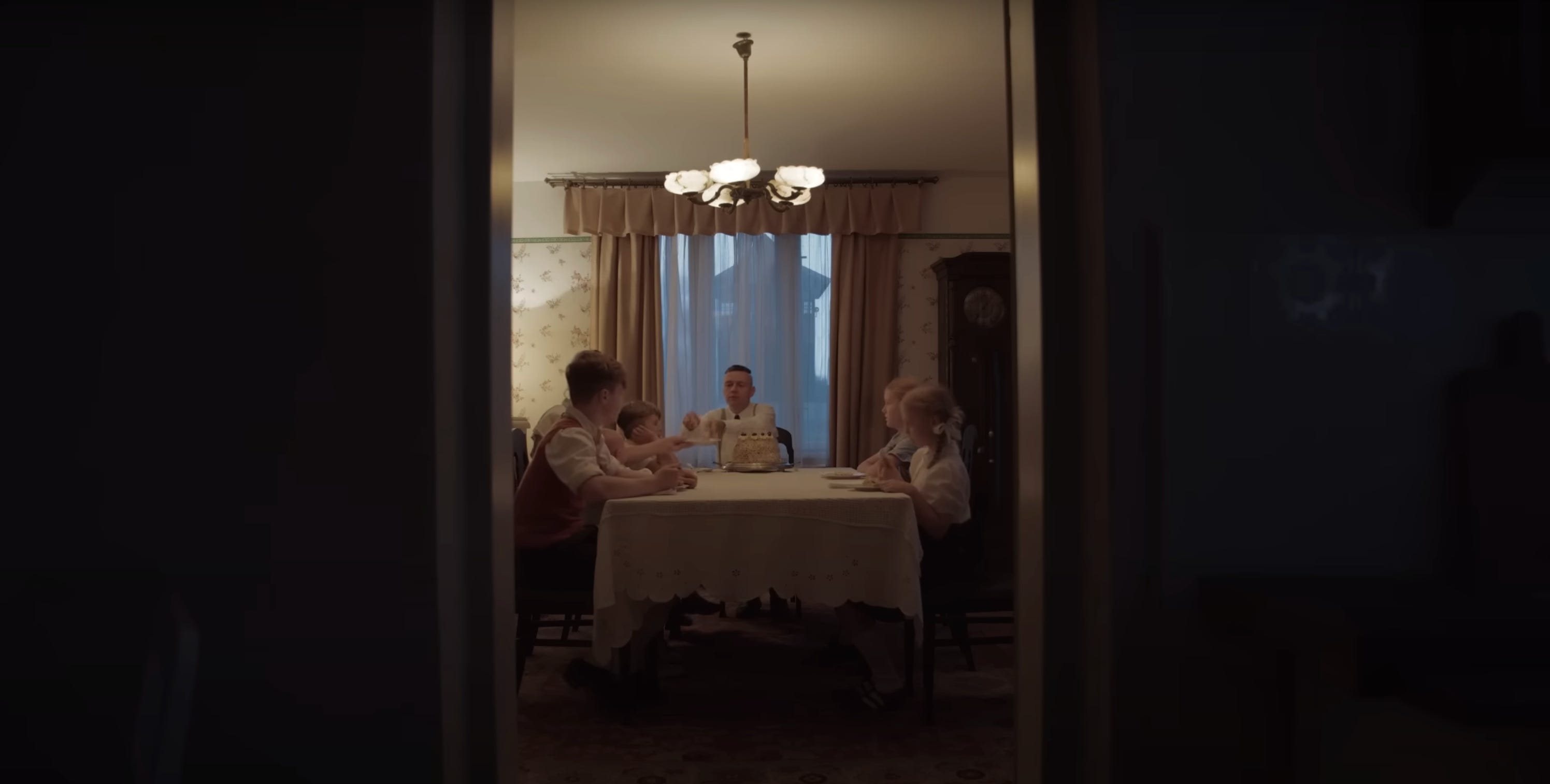
Ingrid and Martha are entirely alone in The Room Next Door, and apart from a short drive to a gym or a cafe, Ingrid cannot leave. The domestic life of Hedwig and Rudolf Höss nestled between train tracks and gas chambers in The Zone of Interest always goes back to the two of them, sleeping in their single beds. There is no ‘outside’ or rather, the outside is death, as seen in the river scene. Bella Baxter’s life in Poor Things revolves around a world made of decors, only to come back to the paternal home. Last, there are no passersby in Fargeat’s Californian streets to the point where the presence of humans seems incongruous. The Substance is the ultimate fishbowl movie where Elizabeth Sparkle cannot escape from herself within the confines of her apartment window.
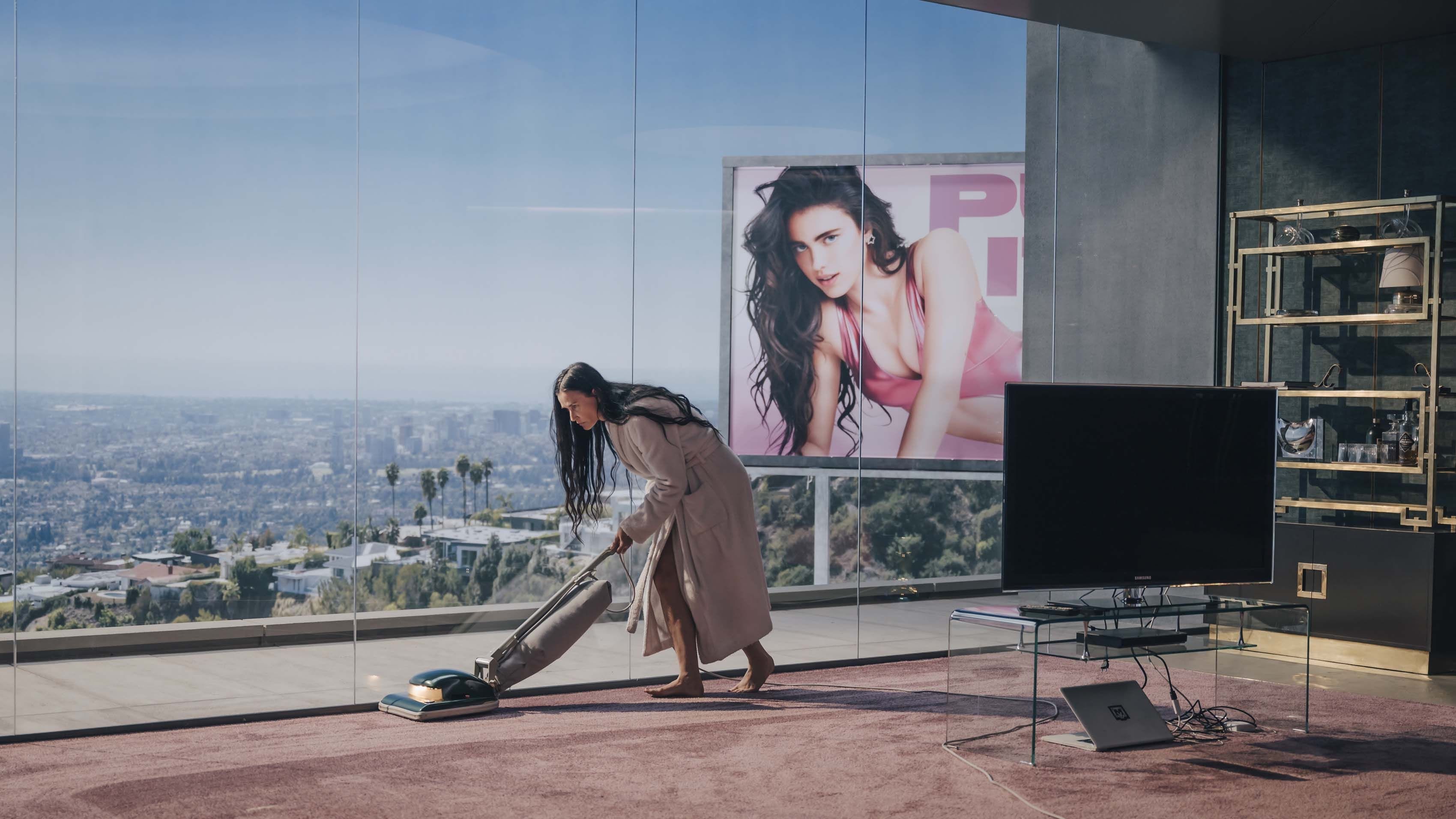
Everything looks like a set, a closed world that has no significance, that is not specifically localized, and that we cannot escape.